How to Source High-Performance Sports Protective Gear: An OEM/ODM Engineering Guide
Oct 13, 2026
Engineering Safety & Comfort: How Top Sports Brands Source High-Performance Protective Gear (OEM/ODM Guide)
In the competitive world of extreme sports—from freeride skiing and downhill mountain biking (MTB) to motocross and equestrian sports—protective gear is no longer judged solely by how hard an impact it can take. Today's athletes and discerning consumers demand something far more nuanced: uncompromised impact protection that feels like a second skin.
For sports apparel brands and product managers, this creates a major manufacturing challenge:
How do you achieve stringent CE Level 1 or Level 2 certification without turning your garment into a stiff, suffocating shield?
How do you ensure cold-weather flexibility down to -20°C for winter snow sports while maintaining maximum ventilation for high-output summer riding?
How do you take an initial sketch or 3D concept to mass production without costly trial-and-error cycles?
As an engineering-driven OEM/ODM manufacturer with over a decade of dedicated experience in impact protection, Shiny Sports has helped leading European and North American sports brands solve these exact challenges.
Here is a practical guide on what to look for when choosing an ODM manufacturing partner and how a consultative co-development approach turns bold ideas into high-margin, market-winning products.
1. The Core Dilemma: Why Most Protective Gear Fails the "Rider Test"
Many traditional factories operate under a simple "build-to-print" model: they take a customer’s drawing and stitch pads into pockets. However, protective apparel for extreme sports operates under dynamic forces and ergonomic constraints that standard garment factories rarely understand.
Common Pitfalls in Protective Gear Sourcing:
The "Over-Engineering" Trap: Specifying maximum pad thickness in areas requiring joint mobility often restricts riders' natural movement, leading to high product return rates.
Thermal & Cold Brittleness: Standard EVA or inferior foam pads stiffen and crack in alpine winter environments (-10°C to -20°C), failing critical cold-temperature impact tests.
Heat Trap & Moisture Retention: Dense, solid pads create localized hot spots, causing rapid rider fatigue and chafing.
Pad Migration on Impact: Inadequate carrier pocket engineering allows pads to shift during a crash, leaving critical bone structures unprotected.
Key Takeaway: Great protective gear is not just about raw padding—it is about ergonomic integration, scenario-specific material selection, and carrier chassis engineering.
2. Consultative ODM vs. Traditional OEM: The Difference Between "Making a Product" and "Making a Commercial Success"
When sourcing custom protective apparel, the most valuable partner is not just a subcontractor that quotes the lowest unit price, but a consultative manufacturing partner that participates from the initial concept phase.
Scenario-Based Risk Mapping: We analyze joint articulation, primary impact zones, and rider posture (e.g., MTB forward-lean vs. Ski vertical stance) before cutting fabric.
Proactive DFM (Design for Manufacturing): We identify structural weak points, seam friction zones, and potential CE test bottlenecks before tooling and sampling begin.
Optimized Total Landed Cost: By eliminating repeated sample revisions and avoiding mass-production modifications, brands significantly reduce time-to-market and total project costs.
3. Material Science & Anatomical Carrier Integration
A complete protective system consists of two critical elements: the impact-absorbing core and the technical textile carrier.
Protection Element
Technical Considerations
Best Application Scenarios
Viscoelastic PU / TPE Formulations
Soft & flexible at rest; instantly hardens upon impact. Superior cold resistance.
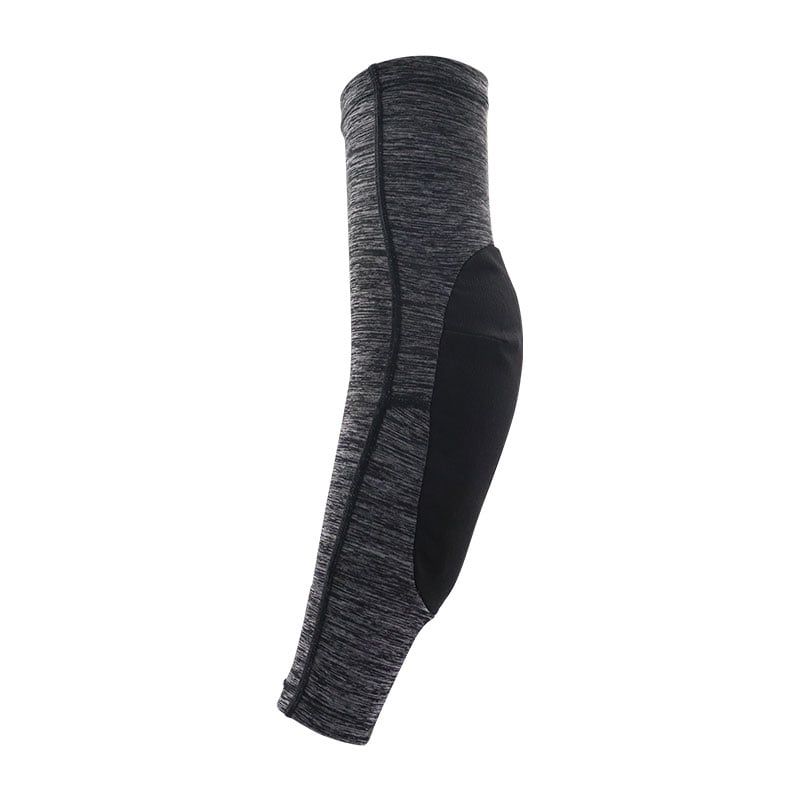
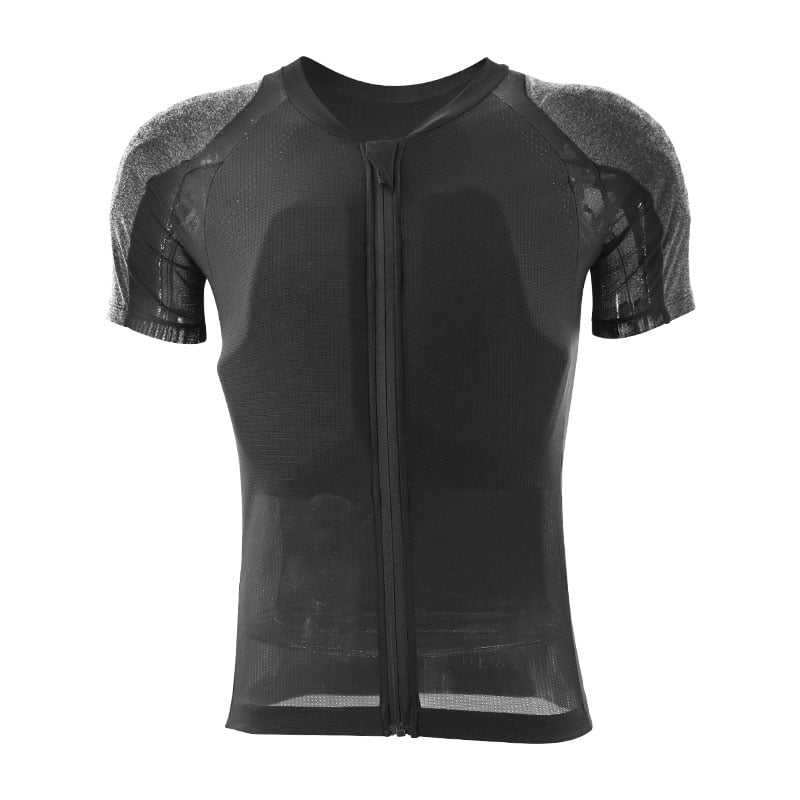
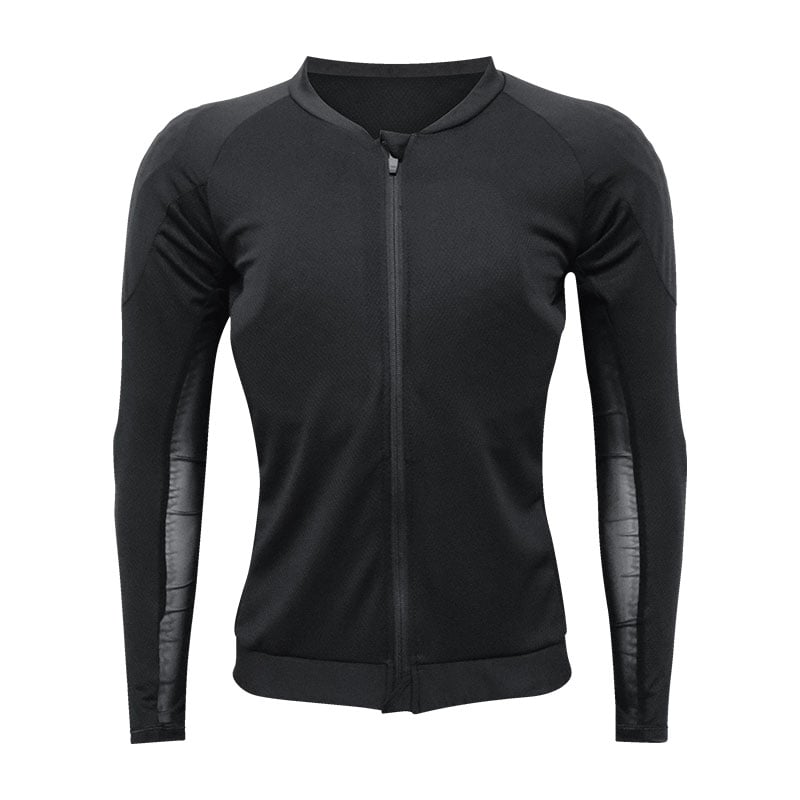
Base Layer Shirts, Arm/Leg Sleeves, Lightweight Vests
Engineering Direct Airflow & Zero Thermal Blockage
To maintain rider comfort, modern carriers must feature zoned ventilation mapping:
Laser-cut micro-perforations aligned precisely with insert breathability channels.
3D spacer mesh linings that lift the pad slightly off the skin to promote convective air circulation.
Low-profile bonded seams and flatlock stitching to prevent pressure points under outer technical shells.
4. Navigating CE PPE Certification (EN 1621 Standards) Without Costly Delays
For brands selling into Europe and international markets, compliance with the EU Personal Protective Equipment (PPE) Regulation (EU) 2016/425 is mandatory.
A qualified ODM partner must have proven experience navigating the essential standards:
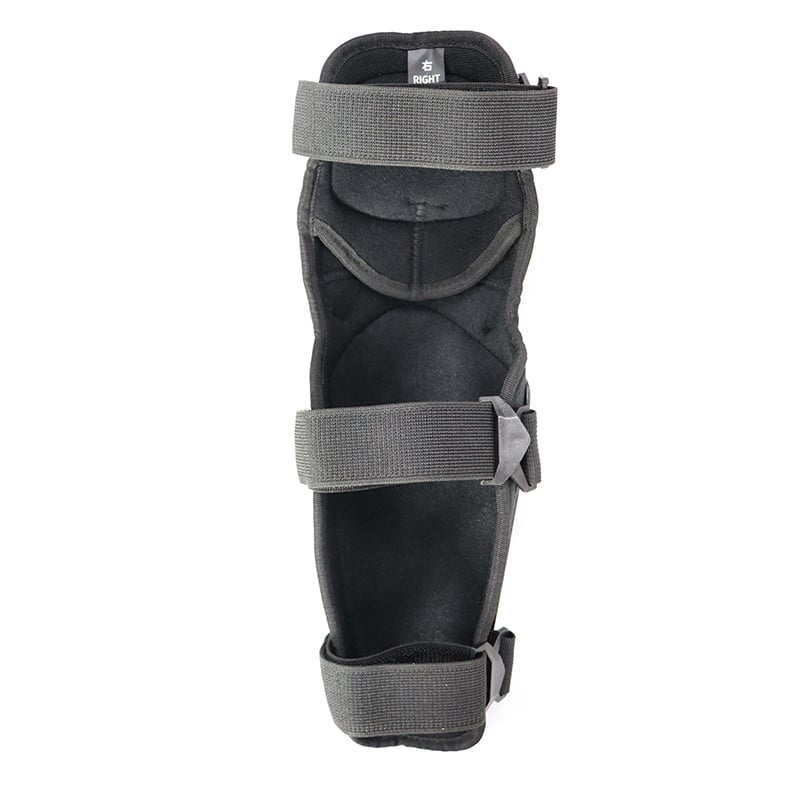
EN 1621-1 (Limb Joint Impact Protectors): Covers knee, elbow, shoulder, and hip guards. Requires testing under ambient, wet, and optional cold conditions (-10°C / -20°C for winter sports).
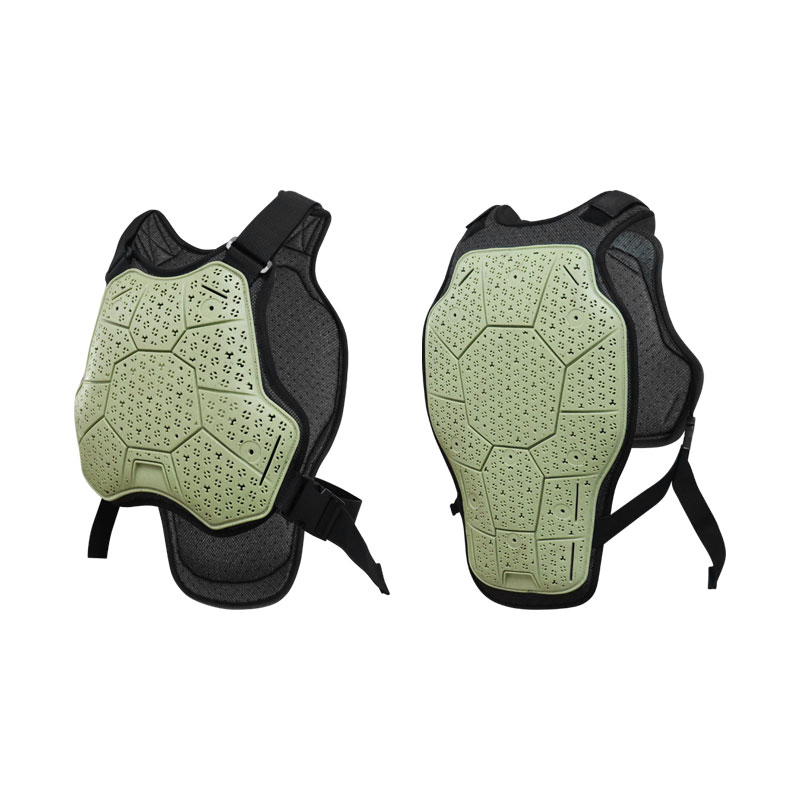
EN 1621-2 (Motorcyclists’ & Sports Back Protectors): Evaluates force transmission across the spine (Level 1: <18 kN mean force; Level 2: <9 kN mean force).
EN 1621-3 (Motorcyclists’ Chest Protectors): Evaluates impact attenuation and force distribution across the sternum and ribcage.
How We Streamline Certification:
Pre-Testing Protocols: Pre-screening material stacks with accredited partner laboratories (e.g., SATRA, TÜV Rheinland, SGS, Ricotest) prior to formal submission.
Complete Technical File Assembly: Compiling chemical compliance documentation (REACH, OEKO-TEX®), dimensional tolerance tables, and multilingual user instruction manuals.
5. Ergonomics in Action: Tested Across Real-World Extreme Sports
Established in 2015, Shiny Sports has spent over 10 years focusing exclusively on high-performance sports protective apparel. Headquartered in Humen, Dongguan—one of the world's most advanced technical apparel manufacturing clusters—we offer an end-to-end ecosystem for brand success.
Key Capabilities at a Glance:
Proven Track Record: Continuous ODM/OEM partner for premier European and North American protective gear brands across multiple seasons.
Rapid Sample Turnaround: 7–10 days for rapid carrier prototypes utilizing our mature platform architectures; 10–14 days for bespoke counter-samples.
Scalable Production Capacity: 50,000+ units monthly capacity with agile scheduling to handle peak seasonal demand (Winter ISPO launches, Spring Sea Otter / Eurobike cycles).
Flexible Component Integration: Experienced in both full in-house turnkey solutions and integrating client-supplied specialized core inserts (e.g., Koroyd, D3O, custom molds) under strict inventory tracking.
Strict IP Protection & Design Exclusivity: Dedicated tooling, customized pocket geometries, and confidential styling protected under comprehensive mutual NDAs.
Ready to Turn Your Protective Gear Concept into Reality?
Whether you are looking to upgrade an existing protective range, engineer a next-generation breathable body armor line, or find a reliable supply chain partner with proven CE compliance, our technical engineering team is ready to assist.
Next Steps for Your Project:
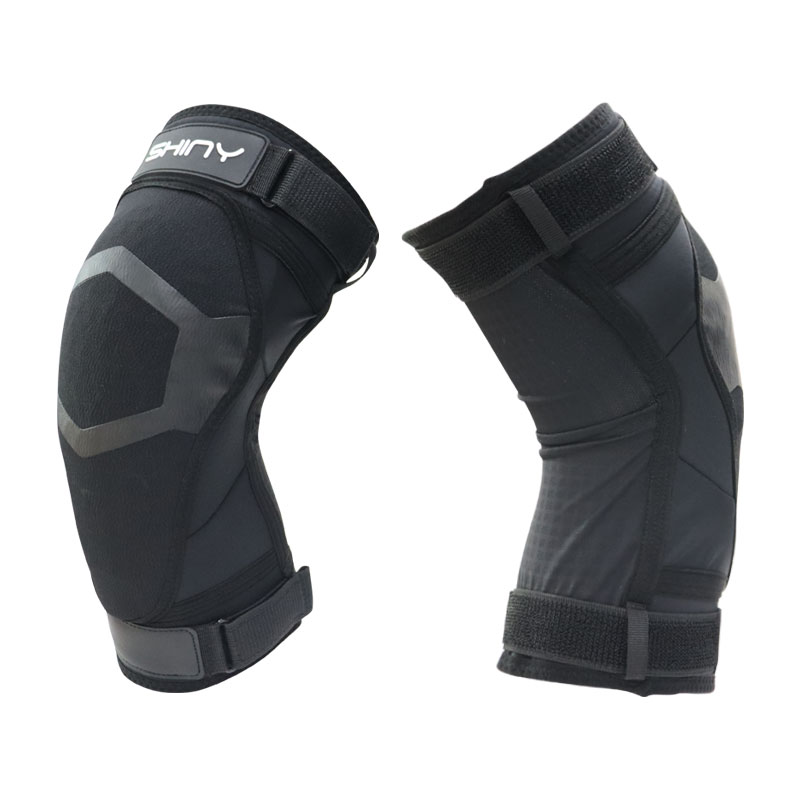
Request Our ODM Platform Catalogue: Explore our open-development protective chassis (Knee/Elbow, Back Vests, Base Layers).
Schedule a Technical DFM Consultation: Review your 3D CAD files or tech pack with our senior pattern engineers.
Rapid Prototype Dispatch: Test our ergonomic fit, cold-weather flexibility, and finishing firsthand.
👉 Contact Our Engineering & Sales Team | Email: charli@shiny-sports.com | Location: Humen, Dongguan, China
 Hot News
 EN
EN